Free guide · Cross Court Estates
The Diaspora Home-Buyer’s Guide to Accra
How to own a home in Ghana from abroad, safely, with predictable monthly payments and without the stories that go wrong.
- Why so many diaspora builds go wrong
- 7 checks before you pay anyone
- Owning property as a non-Ghanaian
- Cross Court at a glance
- The payment plan, stage by stage
- Watching your home rise from abroad
- Your next steps
Chapter 1
Why so many diaspora builds go wrong
Almost every Ghanaian abroad has heard a version of the same story: money sent home for a house, a relative or agent managing the site, and years later a half-finished structure, a land dispute, or no house at all.
It rarely happens because people are careless. It happens because building from thousands of kilometres away is hard to control:
- Land problems: the same plot sold to more than one buyer, or a title that doesn’t hold up.
- No clear budget or timeline: money goes out in pieces with no fixed price or finish date.
- No independent oversight: you only see what someone chooses to show you.
- Informal arrangements: no contract, no receipts, and no recourse when things slip.
A planned, gated estate with a fixed price, a written agreement and a clear payment schedule removes most of these risks. The rest of this guide shows you what to check, whoever you buy from.
Chapter 2
7 checks before you pay anyone
Use this checklist with any developer in Ghana, including us.
- 1
Is the developer registered?
Real estate developers in Ghana must be registered with the Real Estate Agency Council (REAC) under the Real Estate Agency Act, 2020 (Act 1047). Ask for the registration details and check them at reac.gov.gh.
- 2
Is the land title clean?
Ask for the land documents and have a lawyer run a search at the Lands Commission to confirm who holds the title and that there are no competing claims.
- 3
Is there a building permit?
The local Municipal or District Assembly issues building permits. Ask to see the permit for the project.
- 4
Is everything in a signed agreement?
A Sale & Purchase Agreement should set out the price, payment schedule, delivery date, specifications, what happens if payments are late, and what happens if delivery is late.
- 5
Do payments go to a company account?
Pay only into the developer’s registered business account, never to an individual, and get a receipt for every payment.
- 6
Have you had independent legal advice?
Use your own lawyer to review the agreement and the title before you commit. It costs little compared with the value of your home.
- 7
Can you see progress for yourself?
Ask how you’ll receive updates (photos, videos, site visits) and whether you or someone you trust can inspect the site.
Ghana has no mandatory escrow system for off-plan purchases, so your protection comes from the agreement you sign and the checks above. Take your time with them.
Chapter 3
Owning property as a non-Ghanaian
You don’t need to be a Ghanaian citizen to own a home in Ghana. The main difference is how you hold it.
- Ghanaian citizens can hold land on longer leases and in some cases outright interests.
- Non-citizens hold land on leasehold, generally for a term of up to 50 years, which can usually be renewed.
- Ghanaians who hold dual citizenship are generally treated as citizens for land purposes. Check your own position with a lawyer.
In practice, most homes in planned developments around Accra are held on leasehold, for citizens and non-citizens alike. What matters is that the lease is properly documented, registered and transferred to you.
This chapter is general information, not legal advice. Rules can change, and your situation may differ. Please confirm your position with a Ghanaian property lawyer before you buy.
Chapter 4
Cross Court at a glance
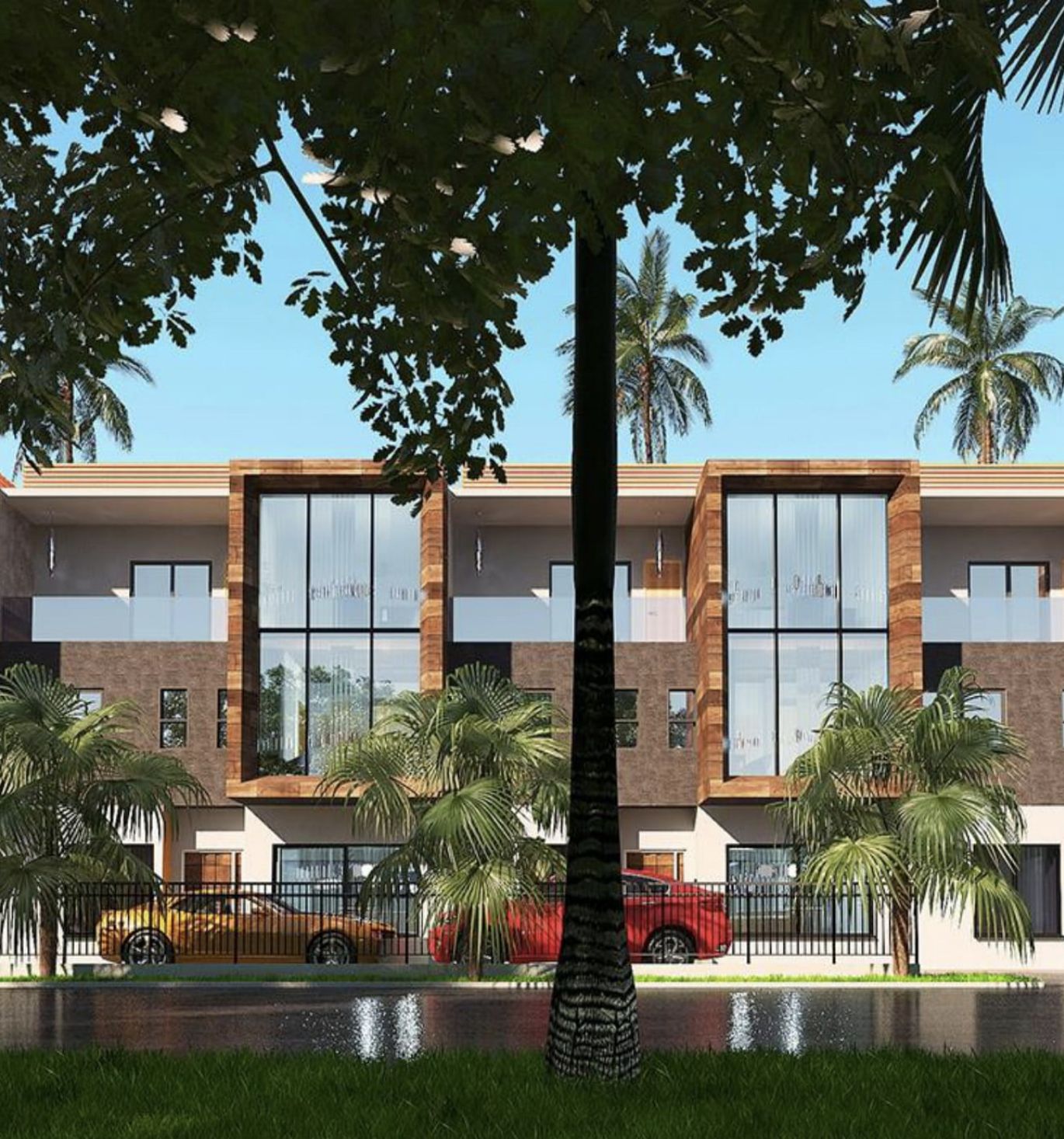
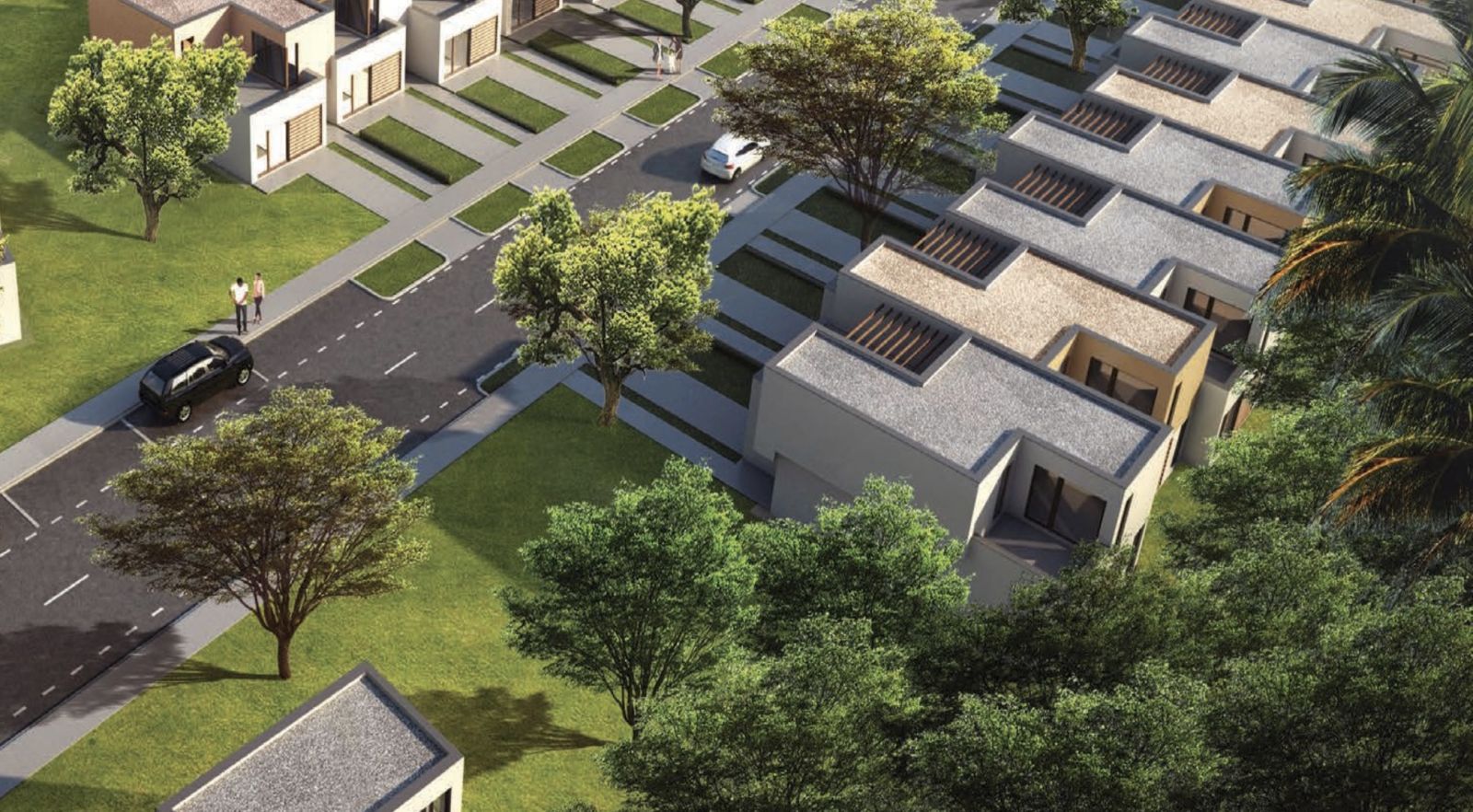
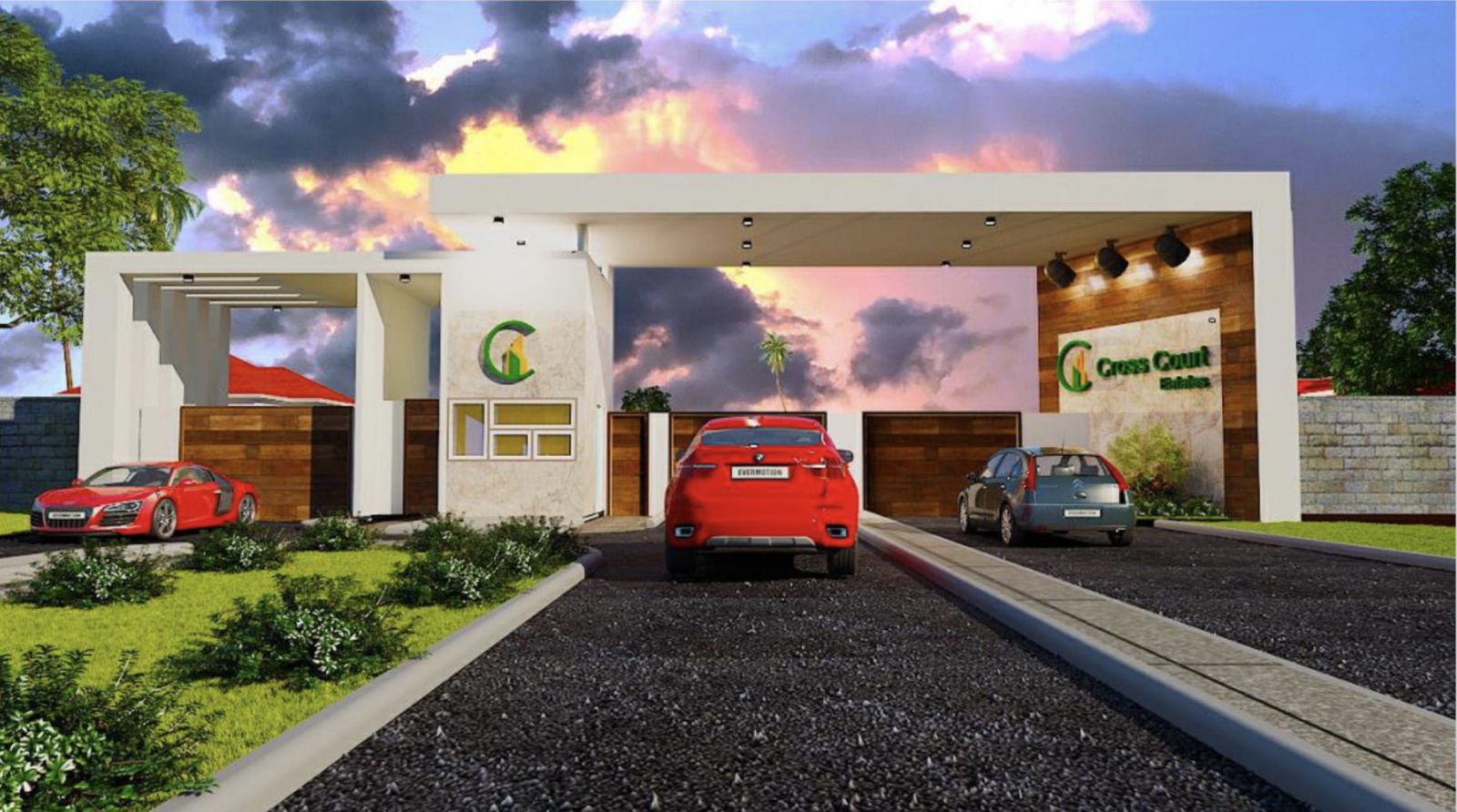
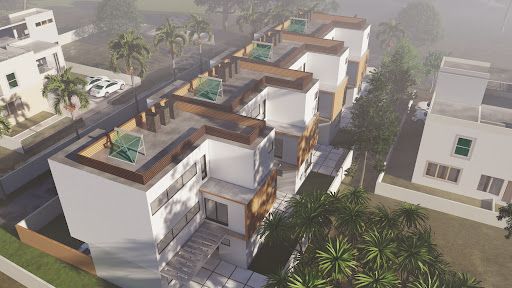
Cross Court Estates is a gated community of convertible 3/4-bedroom court homes in Oyibi, within Appolonia City: a 941-hectare, fully master-planned mixed-use city on the eastern plains of Accra.
| The home | Size |
|---|
| First floor: two en-suite bedrooms, convertible game room, glazed extension | 77 m² |
| Penthouse floor: master bedroom and lounge, walk-in closet, porch | 70 m² |
Around you
- 40 minutes to Kotoka International Airport
- 35 minutes to Tema Harbour and to the Tetteh Quarshie–Adenta highway
- Schools, retail and family parks planned within Appolonia City
Inside the estate
24-hour security, a clubhouse with pool, paved roads and walkways, street lighting, storm drains, gardens, and all utilities underground with ducting for fibre internet.
Images are artist’s impressions.
Chapter 5
The payment plan, stage by stage
One fixed price: $170,000, including $7,000 documentation. You reserve with $10,000, pay $1,500 a month, and receive your keys at month 30.
| Stage | When | Amount |
|---|
| Commitment deposit | On reservation | $10,000 |
| Down-payment balance ($1,500 × 18) | Months 1–18 | $27,000 |
| Development plan ($1,500 × 66) | Months 19–84 | $99,000 |
| Completion payment | At handover, month 30 | $34,000 |
| Total, including documentation | | $170,000 |
What that means in practice
- By handover you’ll have paid about $89,000: the deposit, 29 monthly payments and the completion payment.
- You then move in (or rent out, or hold) and keep paying $1,500 a month, interest-free, until month 84.
- Want to pay faster, or buy a whole block of four? Ask us about accelerated and block options.
Prices in US dollars; early-bird pricing, subject to availability. Your Sale & Purchase Agreement sets out the exact schedule, dates and terms.
Chapter 6
Watching your home rise from abroad
You shouldn’t have to take anyone’s word for progress. As a Cross Court buyer you’ll receive:
- Regular progress updates with photos and video of your block
- A receipt for every payment and a running statement of what you’ve paid
- Site visits whenever you or someone you trust is in Ghana
- A direct line to our team on WhatsApp
Chapter 7
Your next steps
- Join a live virtual tour of the homes, the site and the payment plan, and ask your questions
- Book a one-to-one call to talk through your plans and available units
- Reserve your home with the $10,000 commitment deposit
- Review and sign your Sale & Purchase Agreement with your own lawyer
- Start your $1,500 monthly payments and watch your home rise